Comparison · Curtains
Wave, pinch pleat or eyelet curtains: which suits a Dubai home?
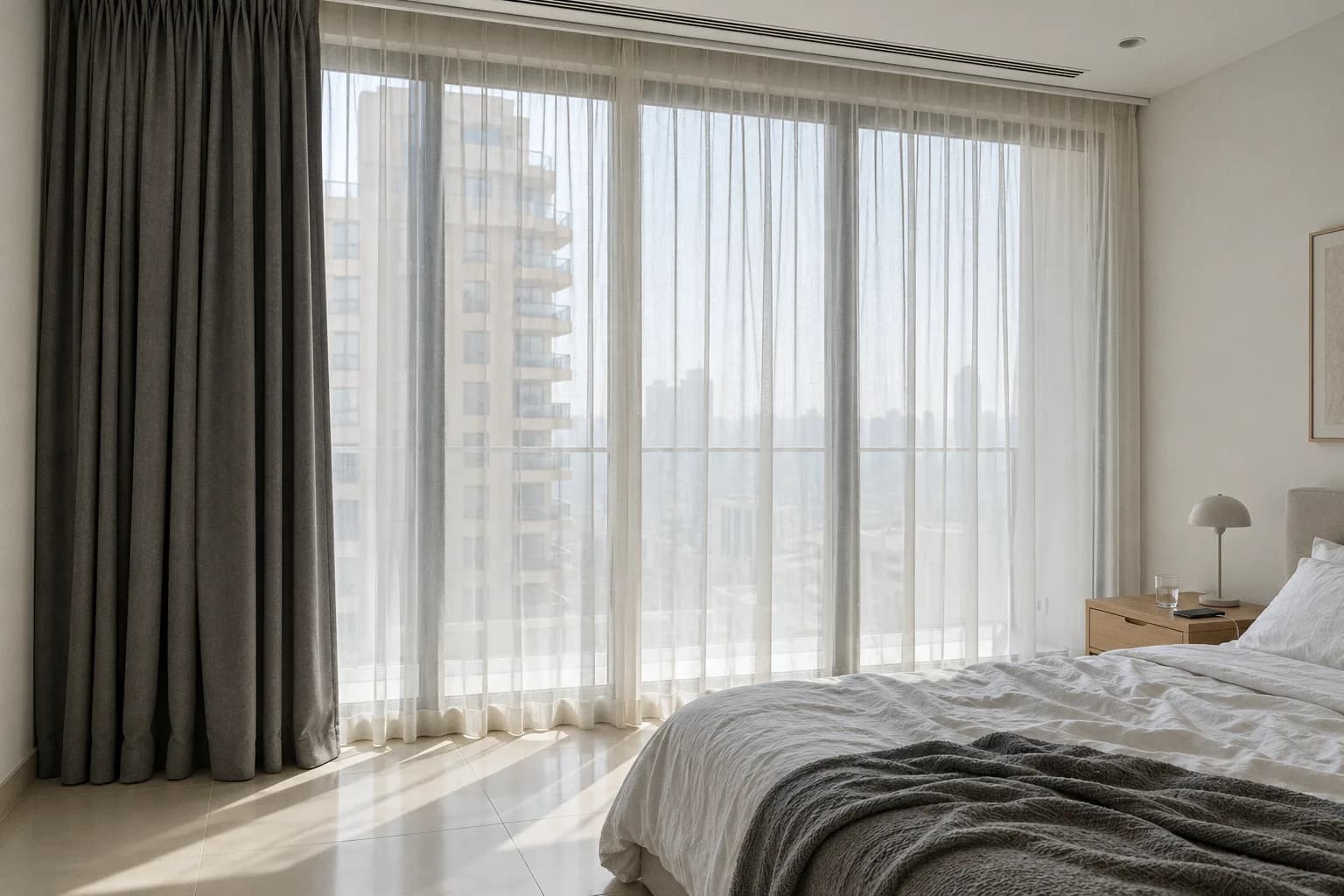
The heading is how a curtain hangs from its track or pole. It sets the look, the fabric you buy, how much glass the open curtains cover, and whether a motor can draw them.
The short answer
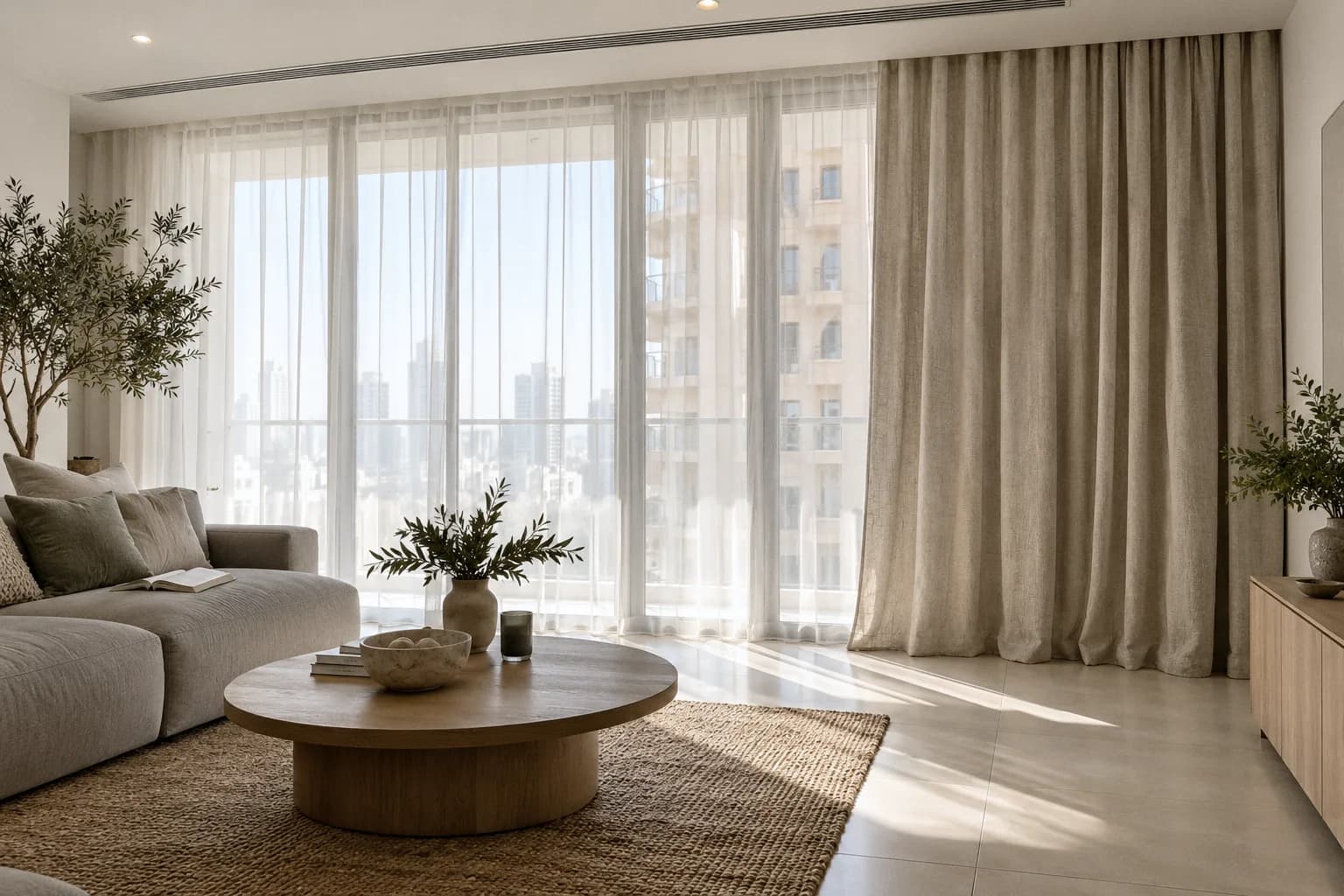
For most Dubai flats and villas, choose wave: it runs on the ceiling tracks most new homes have, takes a motor, stacks into about a quarter of the track when open and comes down flat for cleaning. Choose triple pleat, the fullest pinch pleat, for a formal room or a heavy, lined or patterned fabric. Choose eyelet only for a pole on the wall: it can't hang in a ceiling pocket, take a motor or turn a bay.
- We make all three to measure, at about 2.5 times the track width, and recommend wave or triple pleat for most Dubai homes.
- Open, wave curtains take about 23 to 25% of the track's width; Silent Gliss's pleated headings take about 33%.
- A triple pleat is made at about 2.5 times the track width; wave and eyelet at about 2 times.
- Eyelets need a pole, so they can't hang in a ceiling pocket, take a motor or follow a bay window.
- Somfy's Glydea Ultra curtain motors take pinch pleat and wave curtains of up to 35 or 60 kg.
What the heading changes
The heading is the top of a curtain, where it hangs from its track or pole. It sets the look, how much fabric the curtain takes, how much of the window it covers when open, and which fixings and motors it can use.
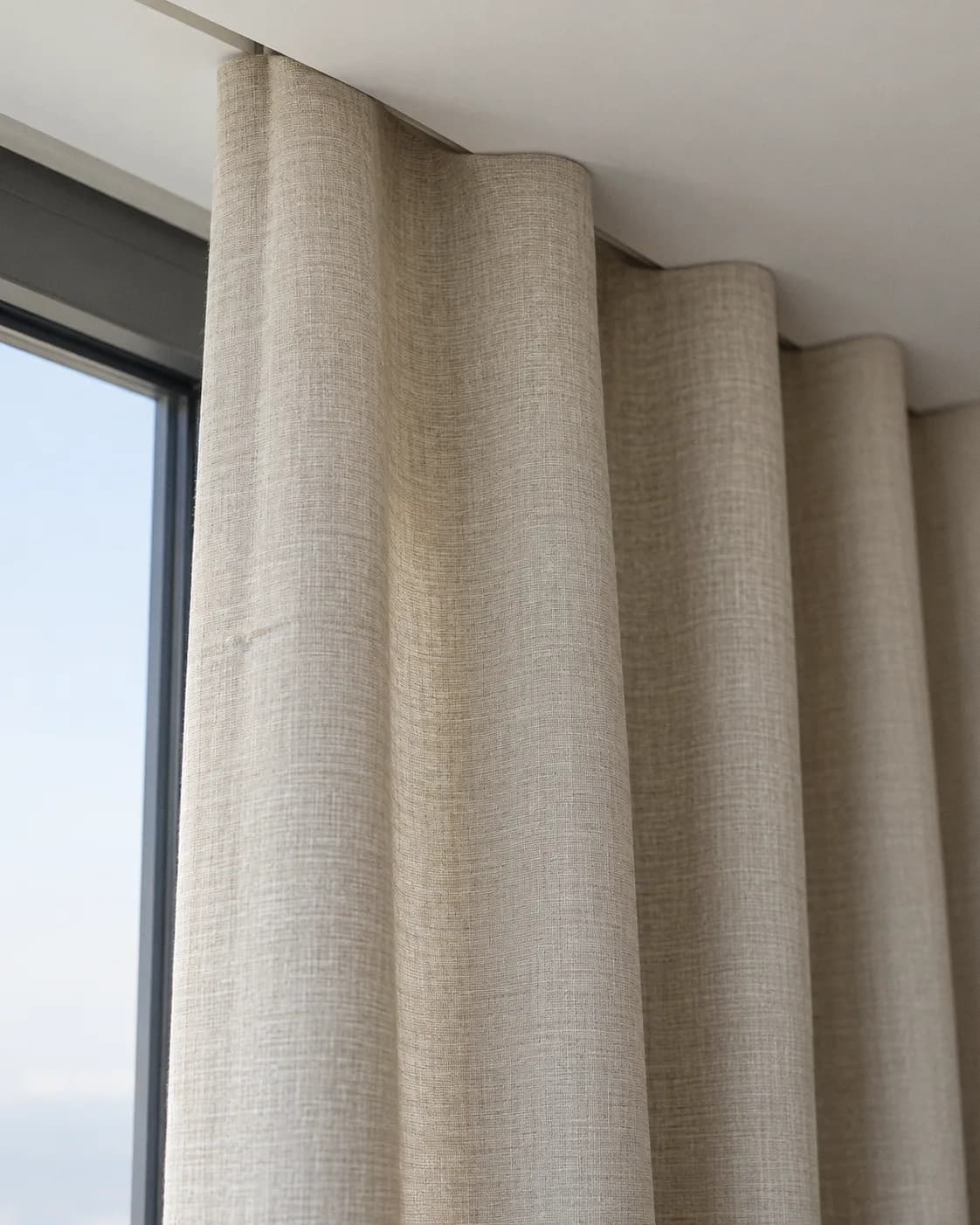
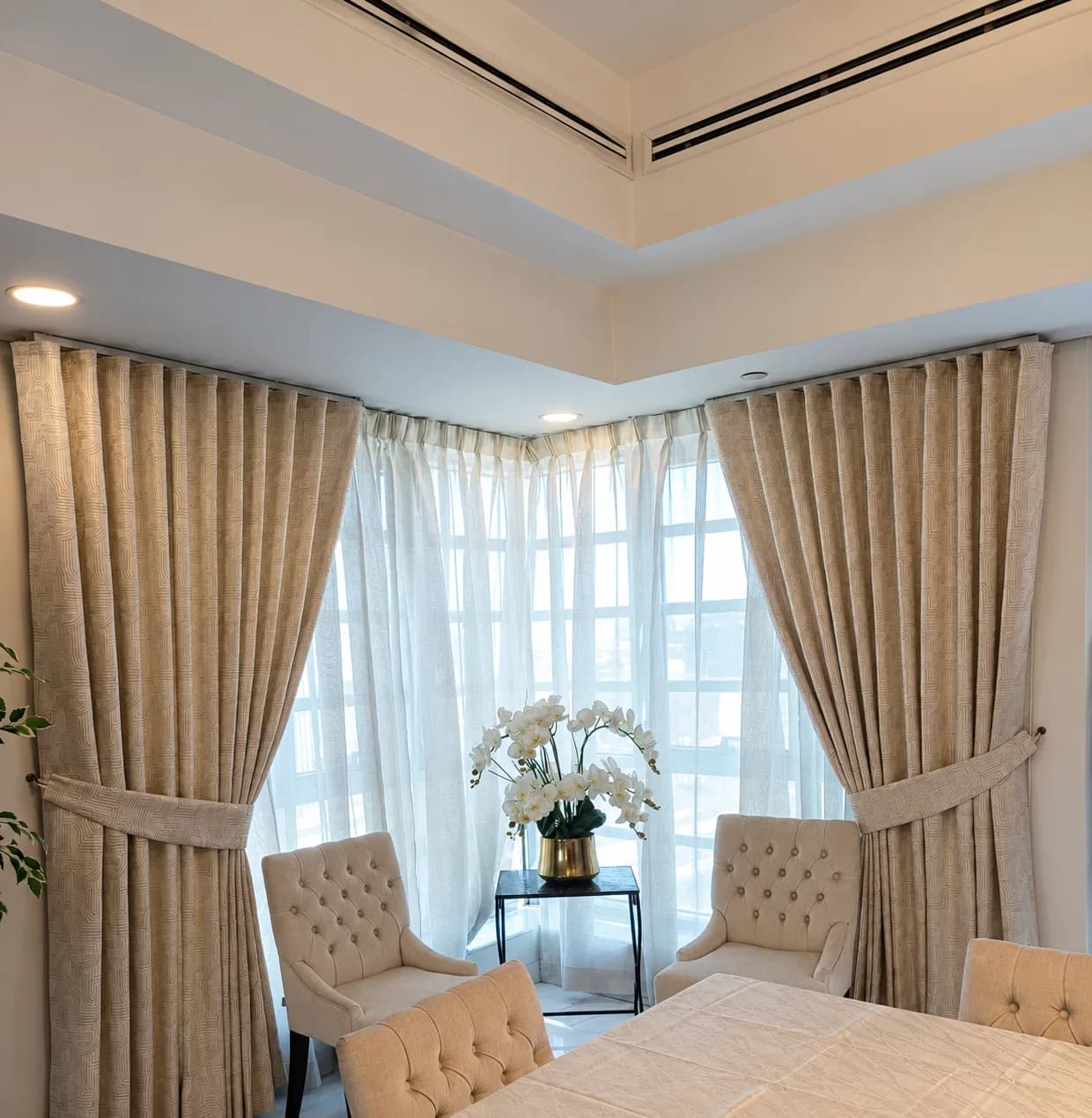
- Wave, also called ripplefold or S-fold, hangs from carriers spaced evenly along a track, so the fabric swings in soft waves in front of and behind the track.
- Pinch pleat gathers the fabric into pleats stitched at the top: two folds each in a double pleat, three in a triple pleat, also called a French pleat. The pleats hang from hooks on a track, or from rings on a pole.
- Eyelet has metal rings set into the top of the fabric, threaded straight onto a pole.
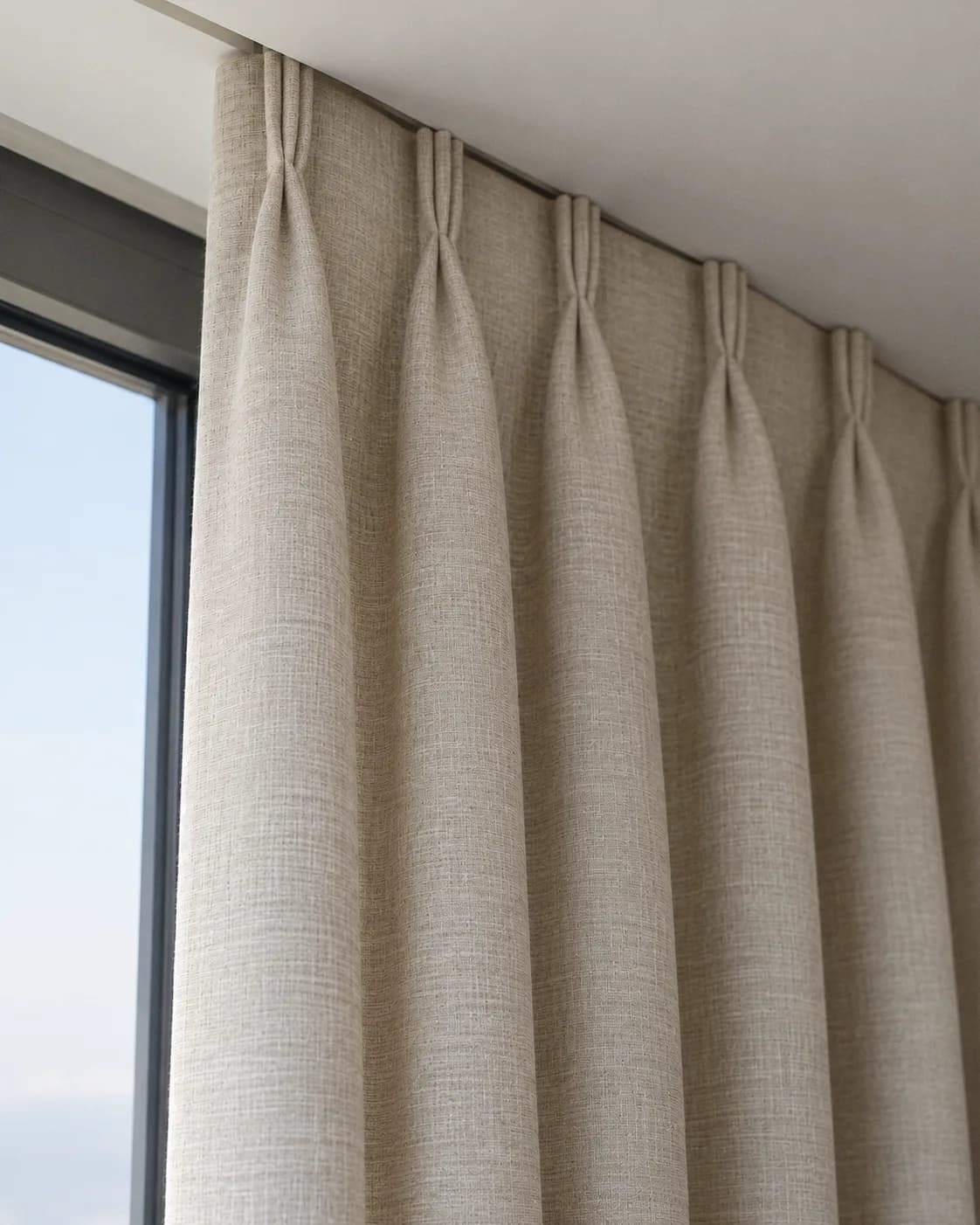
| Wave | Triple pleat | Eyelet | |
|---|---|---|---|
| Hangs from | A track with wave carriers | A track, or rings on a pole | A pole |
| The look | Soft, even waves | Tailored, formal pleats | Deep, relaxed folds, rings showing |
| Fabric width, times the track or pole | About 1.8 to 2.2 | About 2.5 | About 2 |
| Open, it covers | About a quarter of the track | About a third or more | It gathers on the pole |
| In a ceiling pocket | Yes | Yes | No |
| With a motor | Yes | Yes | No |
| Round a bay or curve | Yes, on a bent track | Yes, on a bent track | No |
| To clean | Comes off flat | Unhook the pleats | Off the pole, rings and all |
The wave figures are the track maker Silent Gliss's; the pleat and eyelet figures come from curtain workrooms (sources below).
When wave is right
Wave suits most Dubai flats and newer villas. It is made for ceiling tracks, including tracks recessed in a gypsum ceiling, and it is one of the headings curtain motors are built for.
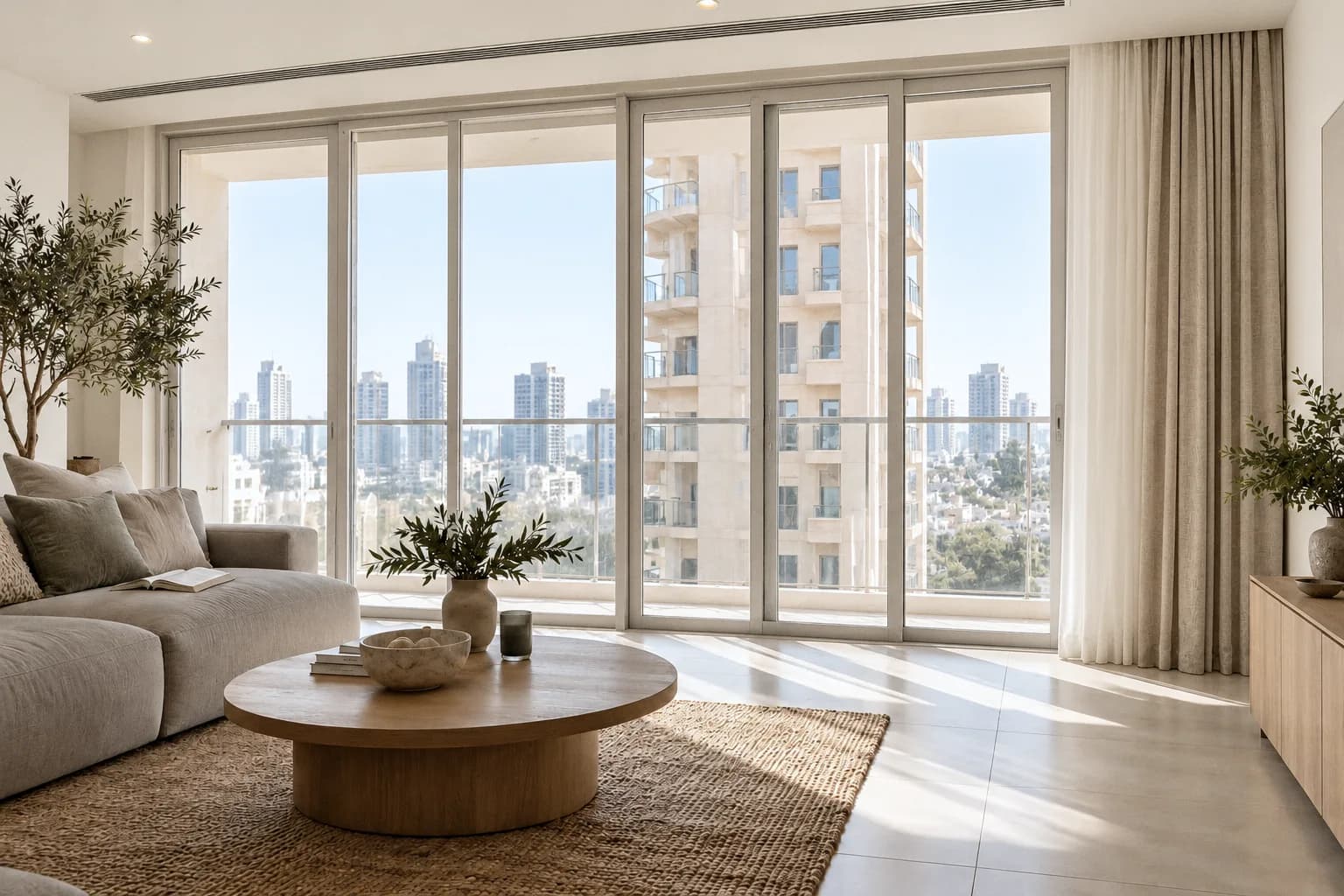
- It leaves more glass clear. Silent Gliss, which makes wave tracks, puts an open wave curtain at about 23 to 25% of the track's width, against 33% for its pleated headings. On a 3 m window that is about 70 to 75 cm of curtain at the sides instead of a metre, which counts on a sliding door you use every day.
- It suits a double curtain. A sheer and a blackout can both be wave, on two tracks (blackout, dim-out or sheer explains the pair). Each wave is 10 to 16 cm deep, so the pocket has to fit both; where it can't, a shallower wave, or a slim pleated sheer behind the wave, fits.
- It comes down easily. Wave curtains are made flat, with no stitched pleats, so they come off their carriers and fold for washing or dry cleaning.
Silent Gliss's workroom guide steers stiff fabrics, heavy embroidery, irregular vertical stripes and metallic threads away from wave: they hang better in pleats.
When triple pleat is right
Triple pleat suits a formal sitting or dining room, and heavy, lined, embroidered or patterned fabrics. The stitched pleats hold their shape from the top, so thick cloth falls in neat, even columns.
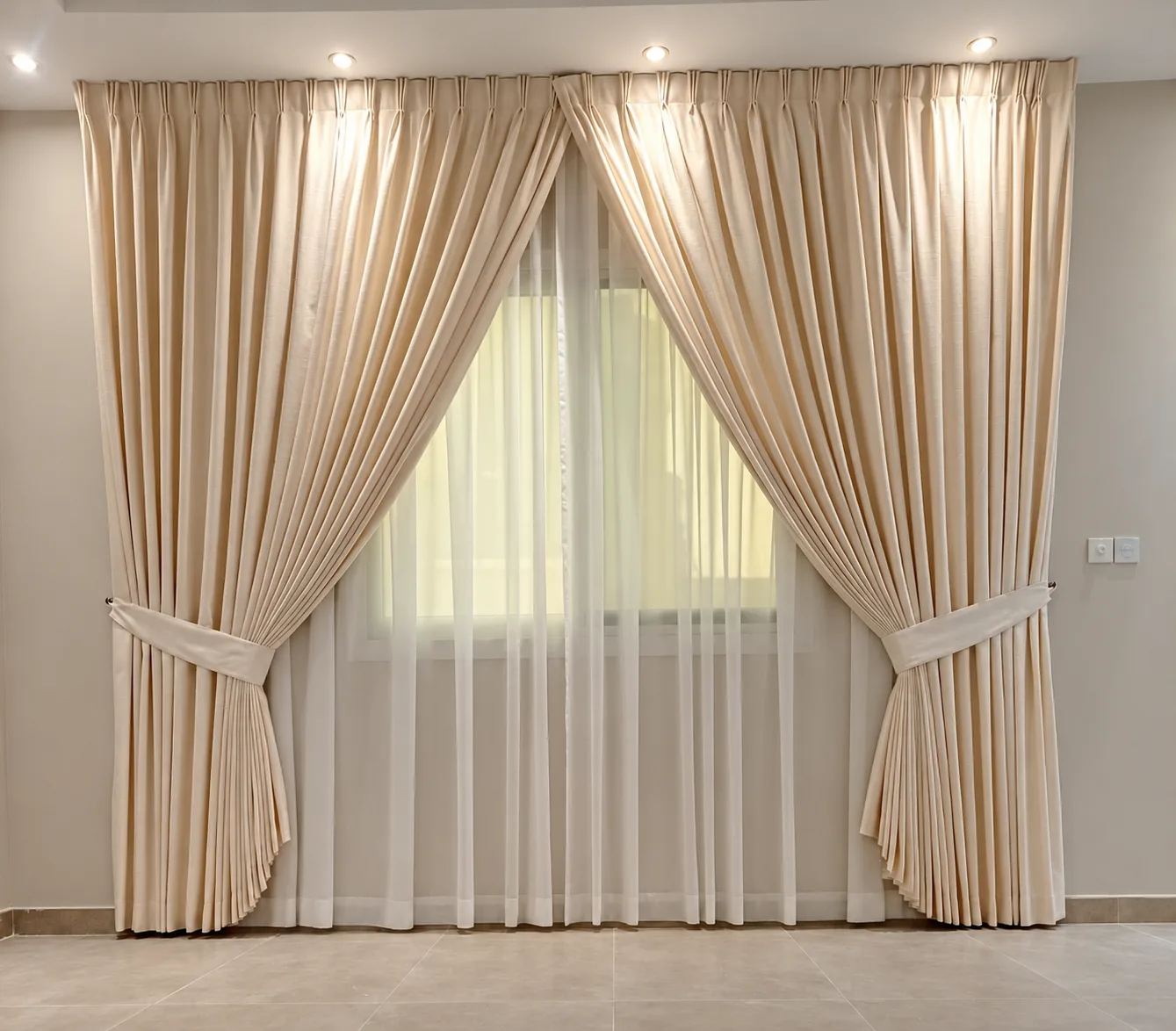
It takes the most fabric: about 2.5 times the track width, against about twice for wave or eyelet. On a 3 m window a layer of triple pleat needs nearly 8 m of fabric width, against about 6 to 7 m for wave. It also takes more room when open, about a third of the track or more.
Triple pleats run on straight tracks and on tracks bent for bay and curved windows, and they take a motor. The pleated style in our room visualiser is a triple pleat.
When eyelet is right
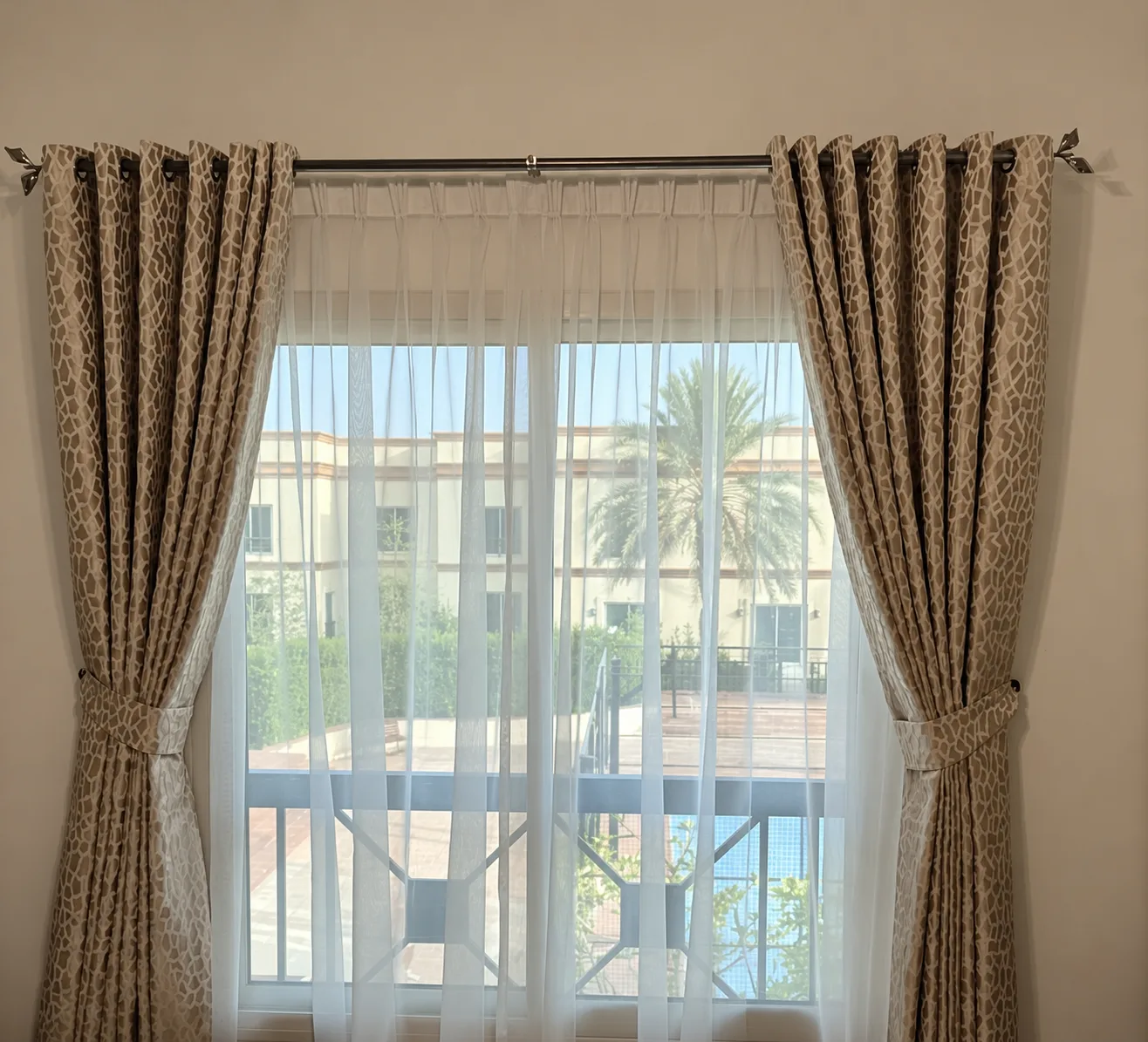
Eyelet suits a simple window on a wall, where a pole above the frame is part of the look: a villa bedroom, a child's room or a study. Eyelet curtains are usually made at about twice the pole's width, and they slide straight onto it.
The pole sets the limits. Eyelets can't hang in a ceiling pocket or from a track; the main curtain motors, such as Somfy's and Lutron's, are made for pinch pleat and wave carriers, not eyelets; and eyelets don't suit bay windows, where the pole has to turn corners. Let the pole run past the frame on both sides, so the open curtains clear the glass.
What we make and recommend
We make all three to measure, and for most Dubai homes we recommend wave or triple pleat: wave for modern flats, ceiling pockets and motors, and triple pleat for formal rooms and heavier fabrics. Eyelet is there for simpler windows where a pole suits.
We make our curtains at about 2.5 times the track width, for full, even folds, and we fit tracks and poles on the ceiling or the wall. A wave curtain only works on a wave track, so if your home has an ordinary track, choosing wave means a new track too.
Can it have a motor?
Wave and pinch pleat can; eyelet can't. Curtain motors are built around tracks with wave or pinch pleat carriers: Somfy's Glydea Ultra motors take pinch pleat and ripplefold curtains of up to 35 or 60 kg, and Lutron's curtain track comes in pinch pleat, ripplefold and S-fold.
We fit Somfy and Fujikawa motors, with timers and control from Alexa or Google Home, so curtains can close on their own before the afternoon sun reaches the glass. A heavier fabric and a fuller heading make a heavier curtain, so the motor is chosen for the curtain: a lined triple pleat across a wide villa window weighs far more than a sheer. Motorised curtains start at AED 2,330 a window (indicative, October 2026).
Curtains in a rented flat
Under Dubai's tenancy law (Law No. 26 of 2007), a tenant needs the landlord's permission to make changes and must hand the home back in the same condition, apart from ordinary wear and tear. If your contract doesn't restrict drilling, holes for a track or pole are usually fine as long as you fill them when you leave; if it does, ask the landlord first.
Many Dubai flats already have a ceiling pocket or track, which avoids new holes. Pinch pleats hang from the gliders most tracks have; a wave curtain needs a wave track.
Which to choose, room by room
- A tower flat with floor-to-ceiling glass and a ceiling pocket: wave, with a sheer behind a blackout or dim-out layer.
- A wide sliding door you use every day: wave, which leaves the most of the opening clear.
- A formal sitting or dining room, or a heavy, patterned or embroidered fabric: triple pleat.
- A bay or curved window: wave or triple pleat, on a track bent to follow it.
- A window you want motorised: wave or triple pleat.
- A simple window on a wall, where you like a pole: eyelet.
Prices in our price guide are indicative, for one window, including fabric, making and standard fitting: sheers from AED 450 and blackout from AED 630 (October 2026). Your quote at the home visit prices the heading and track you choose, with VAT.
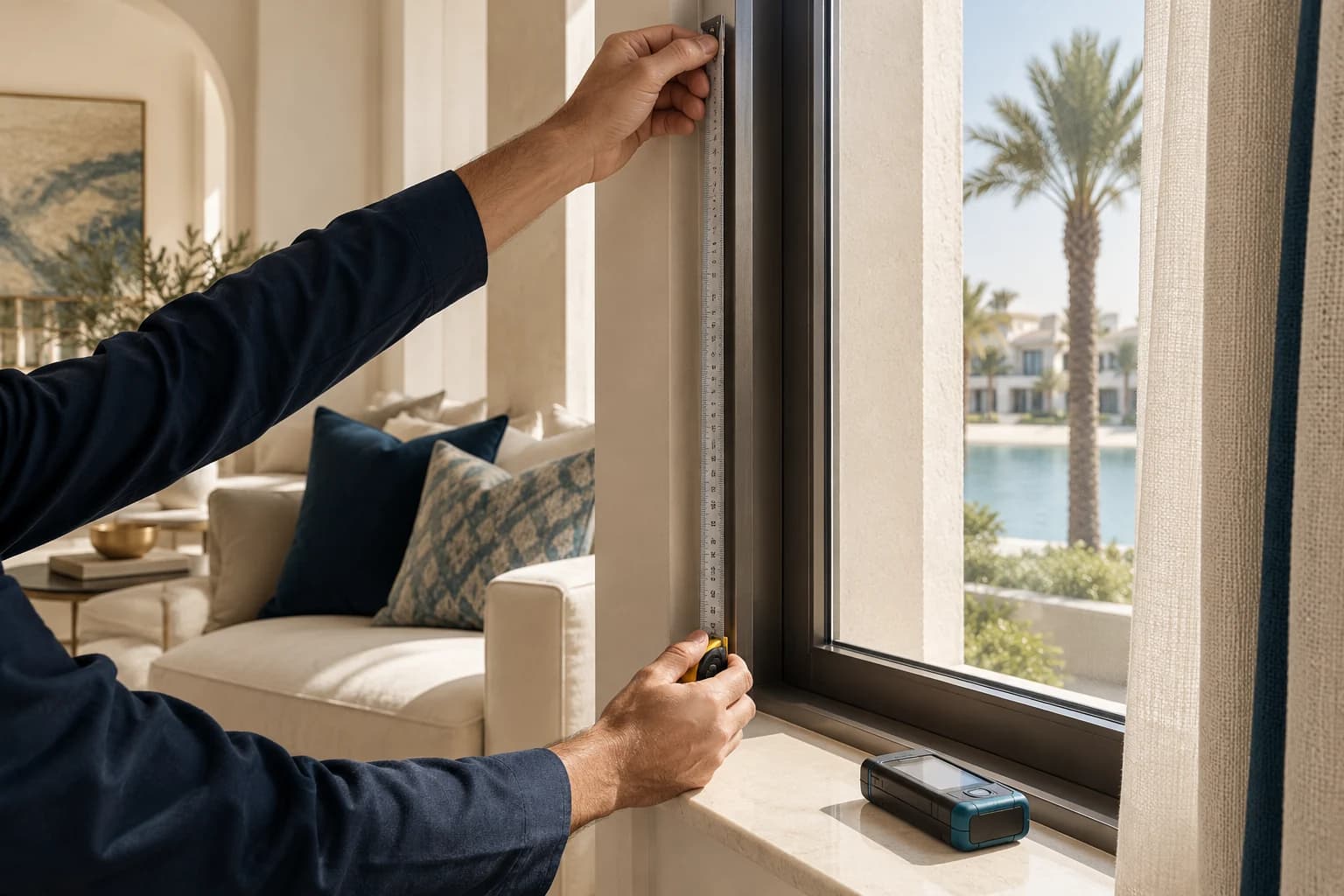
Not sure? Our consultant measures your track or pocket at the free home visit and recommends the heading, with fabric samples to see in your own light.
Sources
- Bespoke curtains: Wave and pleated headings, fullness and stack widths (Silent Gliss, April 2025)
- Wave curtain workroom guide (Silent Gliss, 2017)
- Curtain motor databook: Glydea Ultra (Somfy, February 2026)
- Curtain track system specification 085788e (Lutron, July 2025)
- French pleat curtains: pinch pleat types and fullness (Jotex, October 2026)
- How to measure for curtains: fullness and eyelet curtains (Dunelm)
- Curtain headings explained (Aquarius Interiors, October 2026)
- Can landlords tell tenants not to drill holes? Dubai Law No. 26 of 2007 (Khaleej Times, September 2022)
Questions people ask
What is the difference between wave and pinch pleat curtains?
Wave curtains hang from carriers spaced evenly along a track, so they fall in soft, regular S-shaped waves. Pinch pleat curtains have groups of two or three folds stitched at the top, which look more tailored and formal and use a little more fabric.
What is a triple pleat curtain?
A triple pleat, also called a French pleat, is a pinch pleat with three folds in each pleat rather than two. It is the fullest pinch pleat, usually made at about 2.5 times the width of the track.
Can eyelet curtains be motorised?
Not in the usual way. Eyelets slide along a pole, while curtain motors from makers such as Somfy and Lutron are made for tracks with pinch pleat or wave carriers, so a motorised window needs one of those headings.
Can wave curtains go in a ceiling pocket?
Yes: wave is made for ceiling and recessed tracks. Each wave is 10 to 16 cm deep, so a pocket holding a sheer and a blackout has to be wide enough, front to back, for both layers; our consultant measures it at the home visit.
Which curtain heading uses the least fabric?
Wave and eyelet both use about twice the width of the track or pole, and a triple pleat about 2.5 times. For a 3 m window that is about 6 to 7 m of fabric width per layer for wave or eyelet, against nearly 8 m for triple pleat. We make ours at about 2.5 times the track width, for full, even folds.
Can I use my existing curtain track for wave curtains?
Only if it is a wave track. A wave curtain only works on a wave track, so with an ordinary track, choosing wave means a new track too; pinch pleats hang from the gliders most tracks already have.
Can tenants put up curtains in a Dubai rental?
Usually, with care. Dubai's tenancy law (Law No. 26 of 2007) says a tenant needs the landlord's permission for changes and must hand the home back in the same condition, so check your contract before drilling, or use a ceiling track that is already there.
How do you clean wave curtains?
Wave curtains are made flat, with no stitched pleats, so they come off their carriers and fold easily for washing or dry cleaning; follow the fabric's care label. Pinch pleats unhook, while eyelet curtains come off the pole with their rings still in the fabric.